Google released Gemini 3.8 Flash in late September 2026 and described it as a faster model that keeps more reasoning ability than its Flash tiers usually do. If your business already runs on Claude, the release raises a fair question: is this the moment to move some work across? Our answer is that the release cannot settle that for you, because the deciding factor is not in Google's announcement. It sits in your own workflows, and specifically in whether each one is held back by response time or by the quality of the decisions it makes.
Should a Claude-based business switch to Gemini 3.8 Flash?
Usually not, and not on the strength of the launch. Gemini 3.8 Flash targets response time. Most Australian businesses we work with are not held back by response time; they are held back by agents that need a person to re-check the work. A faster model only helps a workflow whose real constraint is latency, so the useful move is to sort your workflows by constraint first and test Flash only where speed is the limit.
That sorting step is what most comparisons skip. They line up two models and ask which is better. The more useful question is which of your workflows would notice the difference at all.
What Google actually showed
It helps to be precise about the evidence. Google's developer post leans on demonstrations rather than benchmark tables: builders using the model for satellite simulations, 3D engineering models and similar projects. Demos show what a model can do on a good run. They do not show how often it gets a multi-step task right, how it fails, or how it behaves on your data.
So treat the reasoning claims as directional until independent evaluations land. That is not a criticism peculiar to Google. Every vendor launch is written to show the product at its best, and a launch built on demos simply gives a buyer less to test against than one with published numbers.
Latency-bound or decision-bound: sorting your workflows
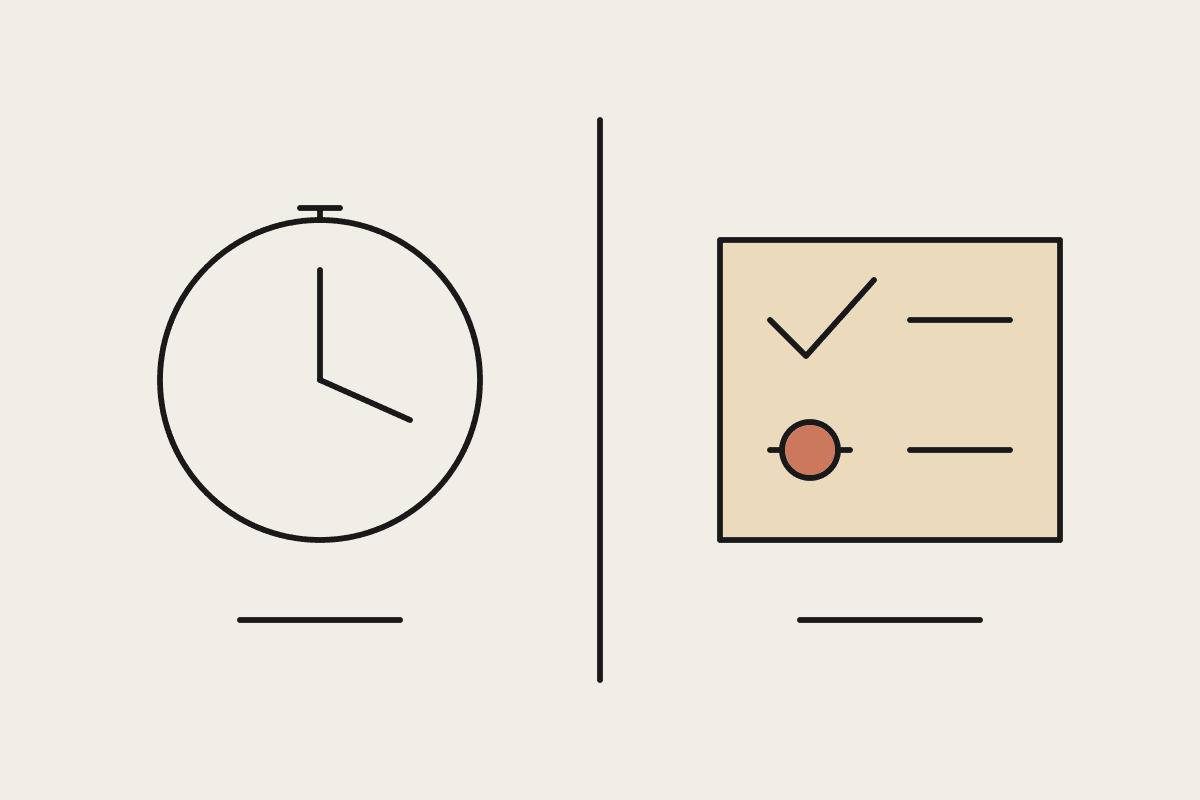
A workflow is latency-bound when people notice and mind the wait, and when a slightly weaker answer is cheap to correct. It is decision-bound when the expensive outcome is a wrong or unexplainable action, and a few extra seconds cost almost nothing. Most businesses have a handful of the first kind and many of the second.
Latency-bound signs: a customer is watching a chat widget, the output is short, a person reviews it straight away, and two seconds already feels slow.
Decision-bound signs: the agent applies business rules across several steps, touches money or contracts, or has to explain why it made a call.
Mixed signs: a fast front end hands off to a slower back-office step. Here you can split the job and test a faster model only on the front half.
Once the workflows are sorted, the comparison gets simpler. A faster model is worth testing on the first group. For the second group, a model swap rarely fixes the problem, because the problem is reliability, not speed.
| Workflow | Main constraint | Cost of a slow reply | Cost of a wrong action |
|---|---|---|---|
| Website chat triage | Latency | Lost enquiry, roughly $150 | Rerouted by staff, low |
| Supplier invoice coding | Decision | Minimal, runs overnight | Rework and GST errors, $2,000 or more |
| Contract clause review | Decision | Minimal, hours are fine | Missed liability, $45,000 or more |
| Internal knowledge search | Mixed | Staff frustration | Wrong policy quoted, moderate |
The figures are illustrative and will vary by business. The pattern is what matters: in decision-bound work, the cost of being wrong outweighs the cost of being slow by orders of magnitude.
Where Claude's strengths sit in that split
Claude's advantage in our client work has been instruction-following on complex, multi-step business logic: accounting workflows, contract review, and agents that make a judgement call and can say why. Those are decision-bound jobs. A faster competitor model does not change the economics of those jobs, because the time saved is small and the risk of a wrong action is unchanged or higher.
We made a related cost argument when Gemini 3.7 Flash arrived: the measure that matters is cost per completed task, not cost per token. Our earlier piece on how Flash-tier speed changes agent design covers the architecture side. This post adds the step before either of those: deciding which workflows deserve a speed test at all.
How to test Gemini 3.8 Flash without disrupting a Claude stack
If you do find a latency-bound path, keep the test narrow and reversible. A sensible sequence for a mid-market team looks like this:
Pick one latency-bound workflow and capture 50 to 100 real past inputs, with personal information removed to keep within the Privacy Act.
Run them through your current Claude setup and through Gemini 3.8 Flash with the same prompt and the same guardrails.
Measure time to first useful output and the share of outputs a reviewer accepts unchanged. Speed without acceptance is not a gain.
Keep Claude in place for every decision-bound workflow while the test runs, so nothing customer-facing depends on the result.
Budget this as a small piece of work. An illustrative internal cost is $3,000 to $6,000 in staff time for a single-workflow comparison, far less than a migration done on the back of a headline.
What not to conclude from the launch
Do not read the release as Google falling behind, and do not read it as a reason to rebuild. Gemini 3.8 Flash is Google closing the gap on fast models that reason reasonably well, which is useful competition. It does not tell you anything new about how well any model handles your rules, your exceptions and your audit trail. The harness, guardrails and review steps around the model will usually move your results further than swapping the model underneath them.
If you want a straight comparison on one of your own workflows rather than a vendor demo, talk to us or see how we run model evaluations in our services.