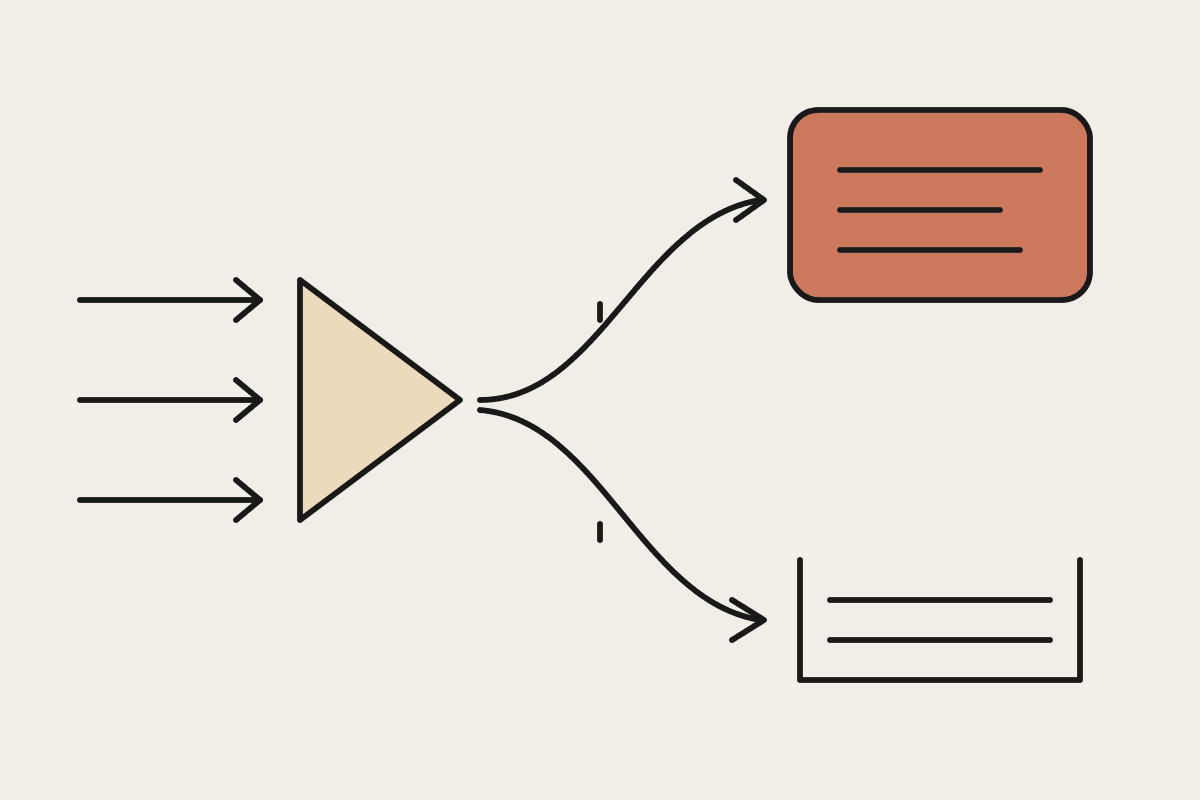
Open decision models such as Cloudflare's Clef-flash and Amazon's Strands Decider are cheap and fast enough that Australian businesses are putting them in front of customer-facing pipelines as a first-pass triage step. They classify enquiries, flag documents and score leads before anything reaches a person or a larger AI system like Claude. That is a sensible architecture. It is also a new point where customer personal information meets a new piece of software, and the Privacy Act does not care how small or cheap that software is.
This is a go-live checklist for the privacy side of that decision, written for the people who own compliance as much as for the engineers building the pipeline. It is general guidance, not legal advice, and it is worth running past whoever handles privacy in your business.
Does a decision model handling customer enquiries fall under the Privacy Act?
Yes, in almost every real deployment. Running a decision model over customer enquiries, support tickets or lead data is handling personal information under the Australian Privacy Principles as soon as the input contains a name, contact detail, account reference or anything else that identifies a person. In practice that describes almost everything arriving in a support inbox. The model being small, open or self-hosted does not change that.
What does change with your deployment choice is the shape of your obligations. Self-hosting and using a vendor's hosted endpoint raise different questions, which is why the first item on the checklist is about where the data goes.
Self-hosted or hosted: what shifts
A self-hosted decision model, such as Strands Decider in a container on your own infrastructure, keeps customer data inside systems you already govern. A hosted endpoint, such as Clef-flash on Cloudflare Workers AI, sends the data to a third party. If that third party's infrastructure sits outside Australia, APP 8 cross-border disclosure considerations come into play.
| Question | Self-hosted decision model | Hosted endpoint |
|---|---|---|
| Where does customer data go? | Your own infrastructure | A third-party provider |
| Is APP 8 cross-border disclosure in play? | Only if your own hosting is offshore | Yes, if the provider's infrastructure is offshore |
| Who controls logs and retention? | You | You and the provider, per contract |
| What needs reviewing? | Your own access and retention settings | Provider terms, data location and retention |
Neither option is automatically compliant or automatically risky. The point is that someone needs to know which one you have chosen and what follows from it, before the pipeline goes live rather than after.
The go-live checklist
Work through these with whoever owns privacy compliance in your business, not just engineering:
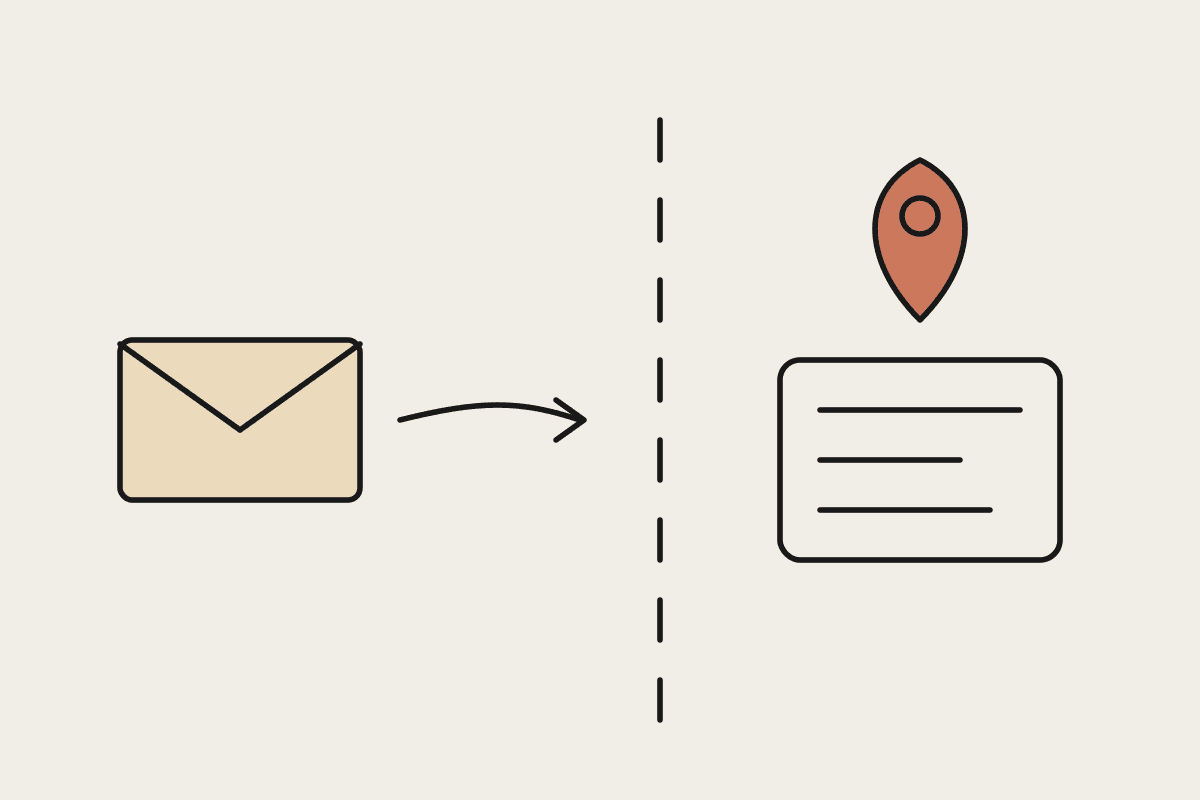
Confirm where the data physically goes. Map the path from inbox to decision model to wherever the label is stored, and note any step that leaves your infrastructure or leaves Australia.
Check that your privacy policy and collection notices actually cover this use. Most Australian businesses wrote their policy before they had an AI triage layer, and a vague line about automated tools is doing a lot of unexamined work in most policies right now.
Set and document a retention period for classification outputs and logged inputs. A decision model's audit log is itself a dataset containing personal information, and keeping it indefinitely because storage is cheap is not a retention policy.
Work out what happens when a misclassification affects a customer, such as a wrongly flagged account or a mis-routed complaint, and check that your complaints process would actually surface that kind of error.
Name an owner. One person outside engineering should be able to explain the data flow and answer for it.
Why the audit log deserves its own line
Teams rightly log every classification so they can tune thresholds and catch drift. That log usually holds the original enquiry text, the label and a timestamp, which makes it one of the richer stores of customer information in the business. Decide who can read it, how long it lives and how it is deleted. If you also pass logs to a provider for support or debugging, that is another disclosure to account for.
Why misclassification is a privacy issue too
A wrong label is not only an operational problem. If a customer's complaint is routed into a queue nobody reads, or their account is flagged in error, they may eventually ask how the decision was made. Your process needs a way to find that case in the log, explain the route it took and correct it. Our piece on automated decisions and the Privacy Act covers the transparency side of decisions that affect individuals.
What getting it right costs
A proper privacy review of a new AI-driven triage step typically runs $3,000 to $8,000 for a mid-sized Australian business if you bring in a privacy consultant to review the data flow and update your documentation. It costs less if your existing privacy function has capacity to do it in-house. Treat that range as an illustrative guide rather than a quote.
That is a smaller number than most businesses expect, and considerably smaller than the cost of a Privacy Act complaint investigation triggered by a customer who noticed their data going somewhere the privacy policy never mentioned. It is also small next to the build itself, so it belongs in the project budget from the first estimate.
Signs the compliance step was skipped
A few quick markers that privacy was skipped rather than completed. If any of these describe your pipeline today, pause and close the gap:
Nobody outside engineering can explain, in plain language, where customer data goes once it reaches the decision model.
Your privacy policy was last updated before the triage pipeline existed.
There is no record of how many classification decisions have been logged, for how long, or who can access that log.
None of this is a reason to avoid decision models. The efficiency gain is real, and our guide to pairing a decision model with Claude shows where they fit. It is a reason to put the compliance step in the project plan on day one. For the wider reform picture, see our overview of the Privacy Act reforms and AI.
If you are planning a triage layer and want the data flow mapped and checked before it goes live, get in touch and we can scope a review alongside the build.