Amazon's Strands Decider arrived in early October 2026 as a fully open 2 billion parameter decision model, with its weights, training data and training scripts on GitHub and Hugging Face. It is small enough that Australian engineering leads keep asking whether they can simply run it themselves. They can. The more useful point is what that small size does to the shape of the project: the hardware question nearly disappears, and almost all of the real work moves into the software wrapped around the model.
If you have not yet looked at what a decision model is, our explainer on the category covers it. This piece is about the stack.
What hardware does Strands Decider need to self-host?
Strands Decider needs far less hardware than the open models most Australian teams have priced before. A single consumer or prosumer GPU with 8 to 12GB of VRAM runs it comfortably for low to moderate volume, which in cloud terms means one modest GPU instance rather than a cluster. For low-volume work, such as triaging a few thousand support enquiries a month, CPU-only inference is viable, with noticeably higher latency. Production throughput of tens of thousands of classifications a day calls for one dedicated GPU instance running continuously.
On cloud providers available in Australian regions, that dedicated instance typically runs $400 to $900 a month depending on provider and region. Compare that with the multi-GPU, high-memory setups needed for the large open models, and you can see why the conversation changes. Picking the hardware is a one-hour decision here, not a procurement exercise.
| Workload | Hardware | Indicative monthly cost (AUD) |
|---|---|---|
| Low volume, a few thousand decisions a month | CPU only, higher latency | Existing server capacity |
| Low to moderate volume | One GPU with 8 to 12GB VRAM | Part of a modest instance |
| Tens of thousands of decisions a day | One dedicated GPU instance, always on | $400 to $900 |
Where the engineering time actually goes
Downloading the weights takes minutes. Making them something a business process can depend on takes weeks. There are three pieces of work, and none of them is optional for a production workload.
A proper serving layer
You need an inference server such as vLLM or TGI wrapping the model with a stable API, health checks and request logging. A Python script that loads the model and prints a label is a demo, not a service. Our comparison of vLLM, SGLang and TGI covers how to choose between them.
A failover path you have actually tested
Self-hosted means you own uptime. When your instance falls over at 2am, something still has to classify the incoming work. That fallback might be a hosted endpoint for the same model, or routing straight to your main model until the service recovers. Either way it has to be built, monitored and exercised, not written into a design document and forgotten.
A labelling and retraining loop
This is the piece that is specific to Strands Decider. Because Amazon published the training data and scripts, you can genuinely retrain or fine-tune the model on your own labelled outcomes over time. That is an opportunity most open releases do not offer. It is also an ongoing commitment, because it needs a pipeline that captures what the model decided, what the right answer turned out to be, and who confirmed it.
The checklist for a first production release looks like this:
Inference server with an authenticated API, health endpoint and structured request logs.
Monitoring on latency, error rate and the share of low-confidence outputs, with an alert owner named.
A fallback path that switches over automatically and is tested on a schedule.
A store of model decisions and human corrections, kept in an Australian region if the inputs include personal information.
Written runbooks so the service does not depend on the one engineer who built it.
A realistic budget and timeline
For an Australian engineering team with reasonable MLOps experience, getting Strands Decider into a production-ready state, including infrastructure, monitoring, failover and documentation, takes about 3 to 5 weeks and somewhere around $12,000 to $22,000 in engineering time. Where you land in that range depends mostly on how much of your existing infrastructure you can reuse. A team that already runs containers, centralised logging and an on-call rotation sits near the bottom; a team building those for the first time sits near the top.
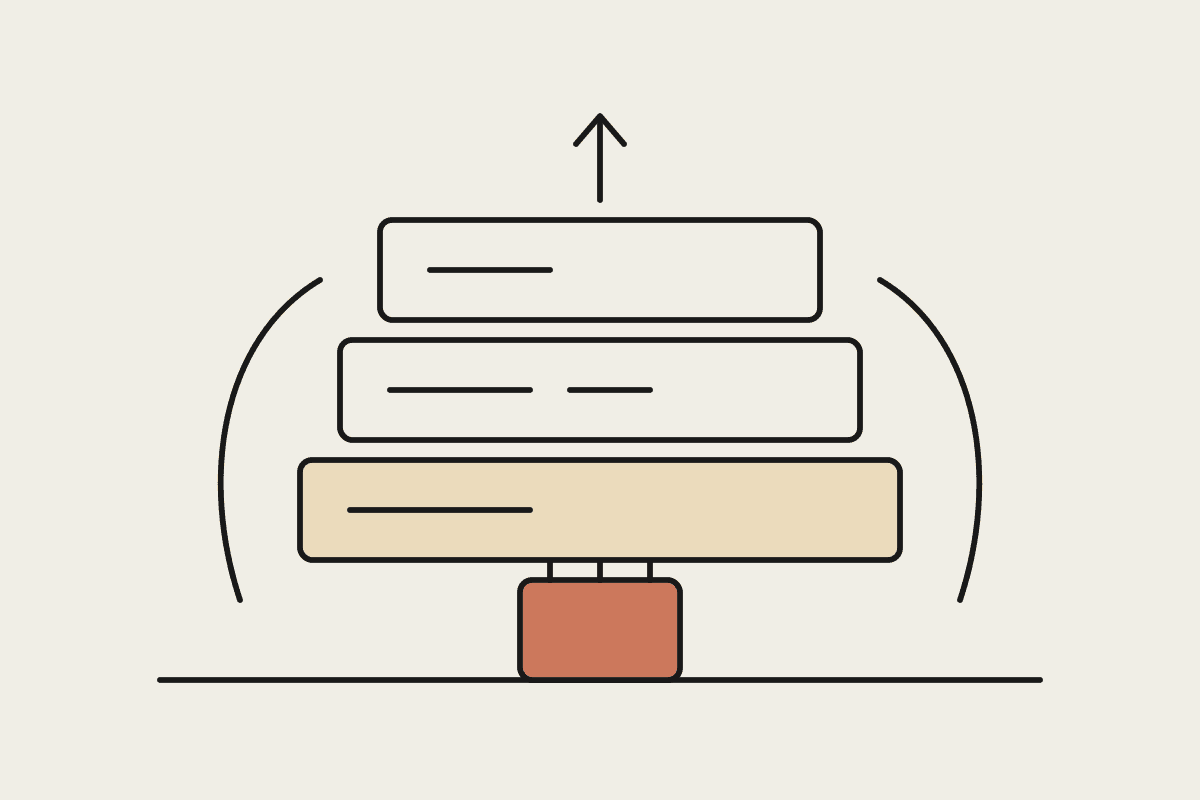
Notice the proportions. The hardware is a few hundred dollars a month. The engineering is tens of thousands up front, plus the time to keep the labelling loop running. That ratio is the opposite of what most people expect when they hear "self-hosting", and it is why we always cost the people before the GPUs. Our breakdown of DevOps labour for self-hosted models goes further into that line item.
Who should take this on
Self-hosting a model this small makes most sense for teams that already run production services and want control over a high-volume classification step, particularly where inputs should stay inside their own environment. It makes less sense for a business with no on-call capability, because the model is the least fragile part of the system. For low volumes, a hosted endpoint will usually be simpler, and the judgment-heavy work behind the decision step stays with a reasoning model such as Claude either way.
If you want a second opinion on whether your team is set up to run a model like this in production, our services include a self-hosting readiness review, or you can contact us for a short conversation.