DeepSeek's V3.2-Speciale variant reportedly achieved gold-medal-equivalent performance at the 2025 International Mathematical Olympiad, the International Olympiad in Informatics, and the ICPC World Finals. These are genuinely hard competitions. IMO problems stump most human mathematicians, and ICPC finalists are drawn from the world's strongest competitive programmers, so a model matching that level of performance is a real engineering achievement, not a marketing stunt.
The natural next question from an Australian operations manager or CFO is whether this means the model can now handle business reasoning tasks better than Claude or GPT. The honest answer is: not necessarily, and the reasons why matter more than the headline score.
What DeepSeek actually achieved
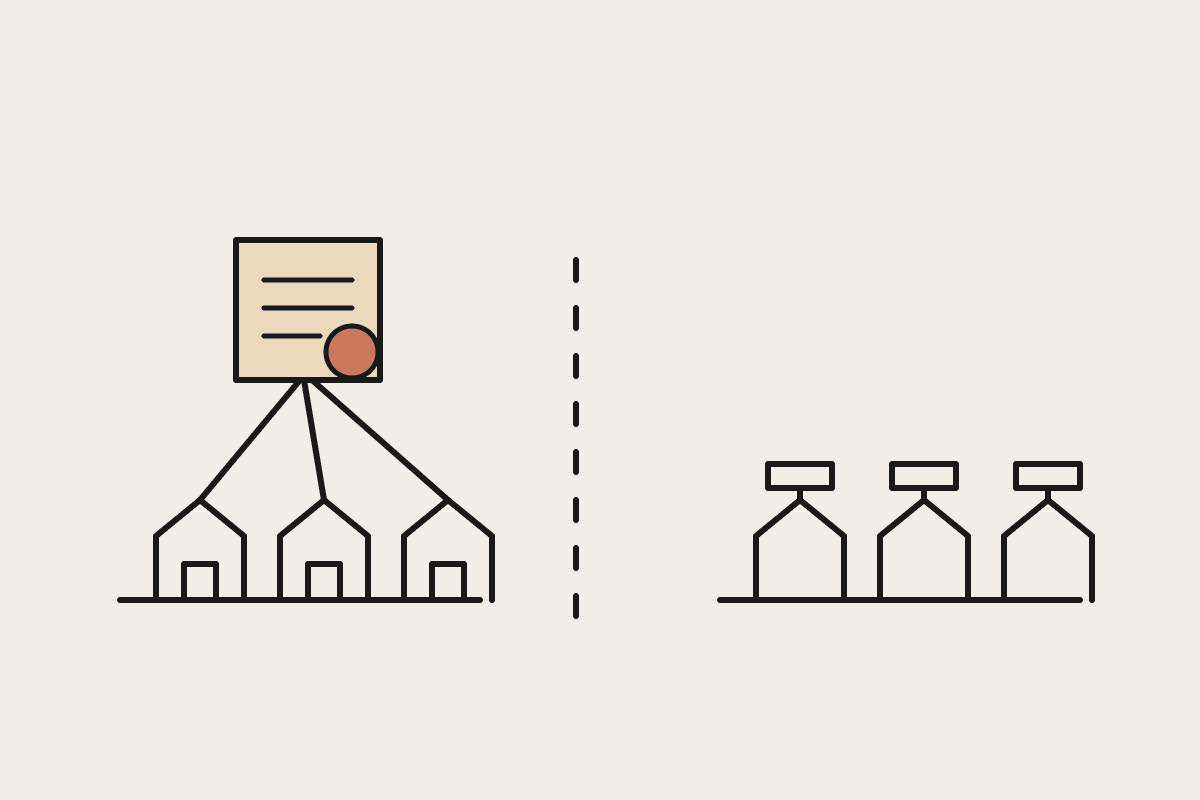
Competition mathematics and competitive programming are closed systems. Every problem has a single, well-specified statement, a provably correct answer, and a judge that can verify the answer automatically. Models can be trained and evaluated against thousands of similar problems, refined until performance on that narrow distribution climbs steadily. That is a legitimate research result. It tells you the model is very good at structured, symbolic problem solving under exam conditions.
It does not tell you how the model behaves when a Melbourne logistics manager pastes in a half-formatted supplier contract with three inconsistent clauses, or when a Brisbane bookkeeper needs the model to flag a GST discrepancy buried across 40 invoices with different formats. Those tasks have no single correct answer, incomplete information, and real consequences for getting it wrong.
Why olympiad scores don't transfer cleanly
Olympiad and competitive programming problems share a structure that most Australian business reasoning tasks simply do not have.
Contract review, invoice reconciliation, and compliance triage involve incomplete information, competing stakeholder interests, and a defensible answer rather than one mathematically correct answer.
Specialised reasoning models are frequently tuned hard against public benchmark problem sets, which can inflate leaderboard scores without improving general business judgement.
A model that wins ICPC finals may still misread a termination clause in a supplier contract or miscount GST on an invoice, because those aren't the skills the benchmark measured.
Benchmark problems are typically single-turn and self-contained, while real workflows are multi-turn, involve tool calls, and depend on context carried across many documents.
None of this means the underlying model is weak. It means a gold medal at IMO is evidence of narrow, well-defined problem-solving skill, and Australian buyers need evidence of a different kind before trusting a model with business-critical work.
The benchmark-to-boardroom gap
There is a second, less-discussed issue for Australian businesses specifically: where the model runs and where your data goes. DeepSeek's models are developed and, in most deployment paths, hosted through infrastructure connected to mainland China. For a business handling client contracts, financial records, or personal information, that raises real questions under the Privacy Act 1988, and for regulated entities it raises additional questions under APRA's CPS 234 information security standard or AUSTRAC's reporting obligations.
A model can be technically excellent and still be the wrong choice if you cannot get a straight answer from the vendor about data residency, retention, or who can access your prompts and outputs. This is a governance question, not a performance question, and it sits entirely outside what any olympiad benchmark measures.
How to actually evaluate a reasoning claim
When a vendor or a blog post cites an olympiad score, the useful question is what happened on your kind of task, not the leaderboard task. Automata AI's own validation process for clients typically costs between $2,500 and $5,000 depending on data complexity, and it always starts with the client's real documents rather than a public benchmark.
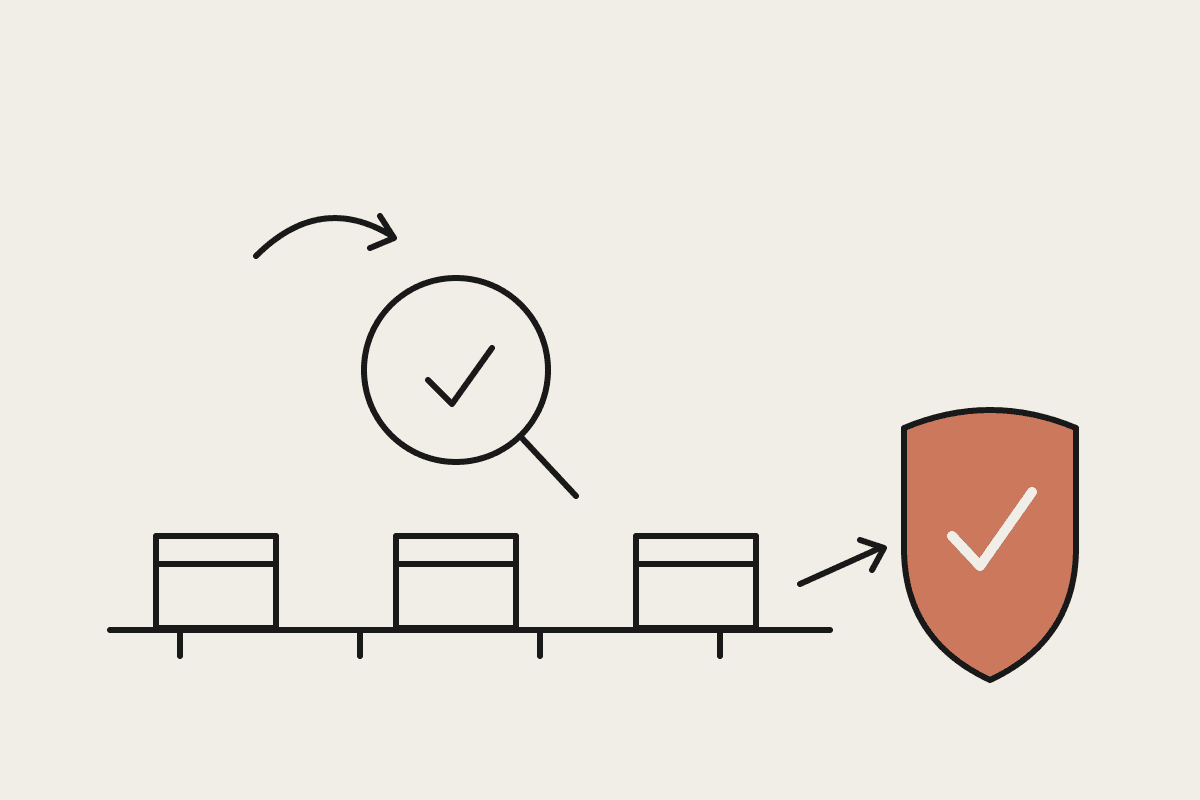
Before trusting any reasoning benchmark enough to build on it, we recommend three practical checks.
Ask for the model's performance on a held-out set of your own business documents, not just public leaderboard numbers.
Check whether the benchmark measured single-turn problem solving or multi-turn, tool-using workflows like the ones your team actually runs day to day.
Confirm the licence, hosting location, and data-handling terms are stable and compliant with Australian privacy and industry-specific obligations before building anything on the model, regardless of how impressive the score looks.
These checks take a fraction of the time an olympiad-winning model took to train, and they answer the question that actually matters to your business: does it work reliably on the documents and decisions you deal with every week.
Where Claude fits
Claude's reasoning strength in production is less about topping a single leaderboard and more about consistent behaviour across ambiguous, multi-step Australian business tasks, something olympiad benchmarks were never designed to measure. Claude can also be deployed through AWS Bedrock in Australian regions, which gives Sydney and Melbourne businesses a clearer answer on data residency than most China-hosted alternatives can offer.
We still recommend clients validate any model, including Claude, against their own data before scaling a rollout. A benchmark score is a starting point for due diligence, not a substitute for it.
If you want help separating genuine reasoning gains from benchmark theatre before your next AI vendor decision, reach out via cal.com/automataai/brainstorm-ai-solutions.