Every few months a provider cuts inference prices sharply and the question lands on some Australian business owner's desk: should we switch to the cheap one? The honest answer is that per-token price is rarely the dominant cost in a real deployment, and businesses that move on headline pricing alone often end up spending more.
Why the sticker price misleads
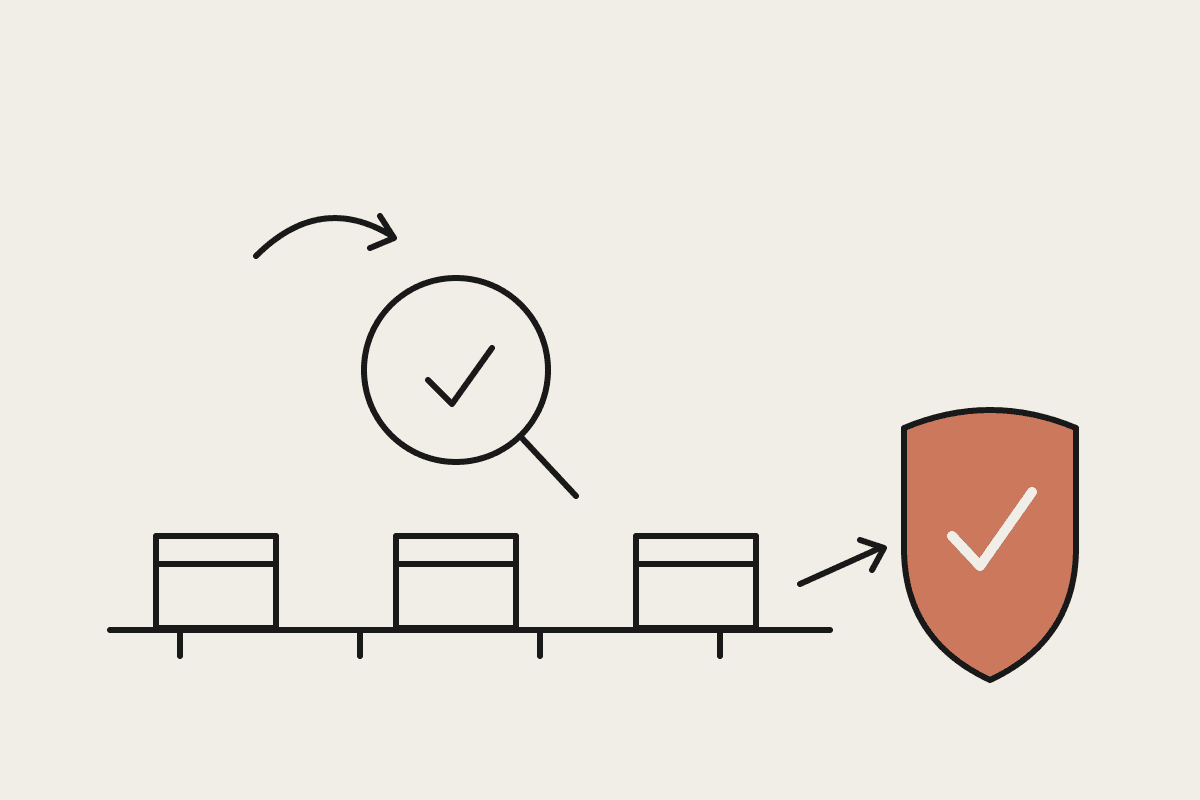
Inference cost is a function of price per token multiplied by tokens consumed, and the second term varies enormously between models. A cheaper model that needs longer prompts, more retries, or a second pass to fix its output can cost more per completed task than the expensive one.
Retries and corrections, which do not appear in a pricing table
Longer prompts needed to get comparable reliability out of a weaker model
Human time spent checking output that needs more checking
Engineering time spent on the migration and on maintaining two integrations
Measure cost per completed task, not cost per million tokens. It is the only number that survives contact with a real workload, and it frequently reorders the ranking.
Where cheap models genuinely win
High-volume, low-judgement work where the task is simple enough that a weaker model does it correctly the first time. Classification, extraction, tagging, routing: work with a narrow right answer and an obvious wrong one.
At real volume the savings here are substantial and worth chasing. A business classifying 200,000 support messages a month is in a completely different economic position from one drafting forty proposals, and the correct model choice differs accordingly.
The questions price cuts should prompt
Not "should we switch" but "what are we currently spending, on what, and is any of it obviously mispriced". Most businesses cannot answer the first part, which makes the second unanswerable.
Getting visibility of spend by workload takes an afternoon and pays for itself regardless of what you decide. It is also the only way to notice the single runaway process that is quietly consuming most of the bill.
Switching costs are real
Moving a workload is not free even when the API is broadly compatible. Prompts tuned for one model behave differently on another, output formats shift, and the evaluation work has to be redone.
Budget a week of engineering time for a meaningful migration, which at Australian rates is $8,000 to $15,000. Against a workload costing $500 a month, a 40 per cent price cut takes four years to repay that. Against one costing $8,000 a month, it repays in weeks.
Where the data goes matters more than the price
Before switching to any provider on cost grounds, establish where processing occurs, what is retained, and whether your inputs may be used for training. For businesses handling client information under the Privacy Act, that is a prior question rather than a footnote.
Some of the cheapest options are cheap partly because the data arrangements are less favourable to you. That may be perfectly acceptable for public content and completely unacceptable for client records, and the distinction should be made deliberately.
The strategy that survives price volatility
Do not architect around one provider. Route model calls through a single configurable layer so that switching is a settings change rather than a project, and keep an evaluation set that can be run against any candidate in an afternoon.
That combination turns every future price cut into a cheap experiment instead of a strategic debate. Given how frequently pricing moves, the portability is worth more than any individual saving.
What good cost discipline looks like
Someone owns the bill and reviews it monthly. Spend is attributed to workloads rather than sitting as one line. Expensive models are reserved for tasks that justify them, and there is a documented reason for each assignment.
None of that requires special tooling. The reason it is rare is organisational: AI spend usually starts on someone's card during an experiment and never acquires an owner, and by the time finance asks, nobody can explain the shape of it.
What not to conclude
A price cut is not a signal about quality in either direction. Providers cut prices for competitive reasons, efficiency gains, and to buy market share, and none of those tells you whether the model does your work well.
Nor should cost be the primary lens on a small deployment. If you are spending $300 a month, optimising it is a poor use of attention compared with finding the second process worth automating. Cost discipline matters at the point where the bill is large enough to notice, and not much before.
If your AI spend has grown without anyone owning it, book a short call and we will work out where it is actually going.