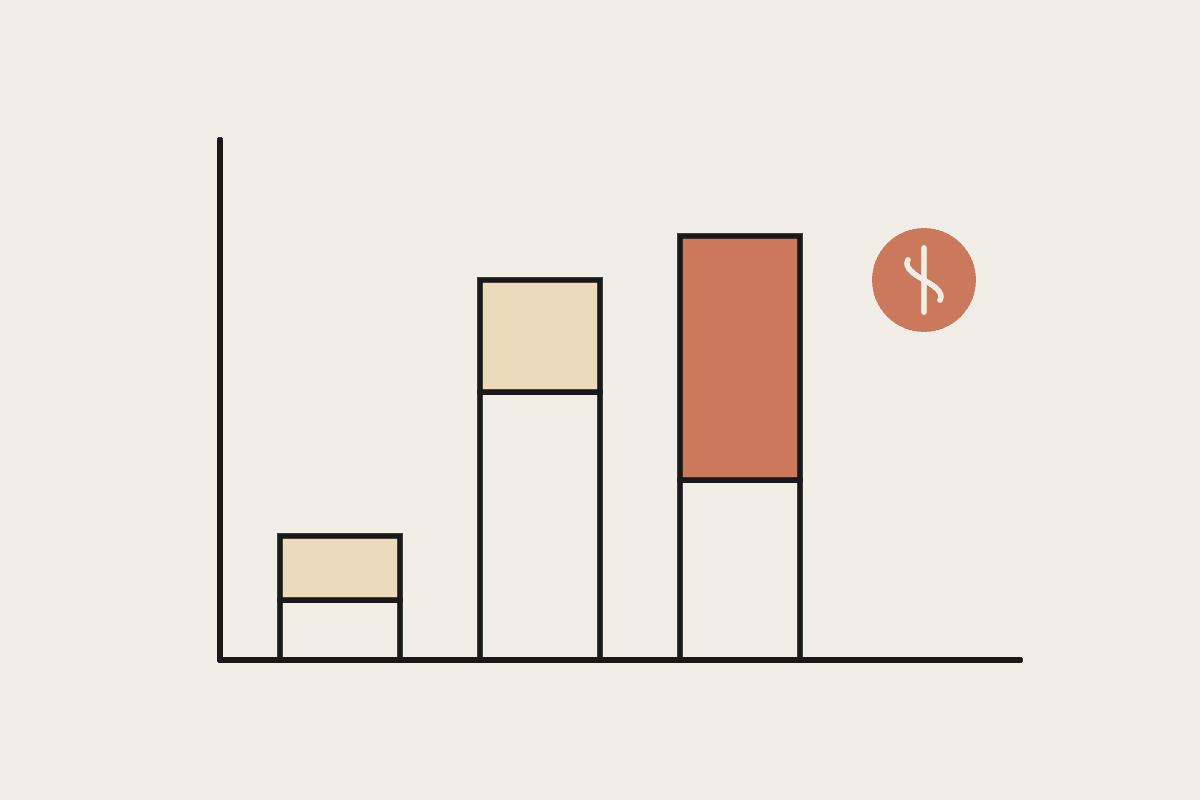
A figure doing the rounds has enterprise open-weight usage falling from around 19 per cent to about 11 per cent. It gets read as evidence that open models lost. The more useful reading is that a lot of businesses tried self-hosting, discovered what it actually costs to run, and quietly went back, which is a finding worth learning from rather than a verdict on the technology.
Why enterprises retreat from self-hosting
Almost never capability. The models are good enough for the workloads most companies were running on them. What defeats these projects is that inference infrastructure is a production system, and production systems need people.
Capacity planning for demand that is spiky and hard to forecast
Patching, upgrades and the testing that has to follow each one
Monitoring and on-call cover, because it now fails in ways your business notices
Specialised staff who are expensive and, in Australia, genuinely hard to hire
The pilot that ran beautifully on one server does not resemble the thing you have to operate at scale. That gap is where the eight percentage points went.
The cost model people get wrong
Self-hosting is compared against API pricing on a per-token basis, which flatters it enormously. The comparison that matters includes hardware or reserved capacity, the engineers, and the opportunity cost of what those engineers are not building.
For a mid-sized Australian firm, running inference properly is realistically $200,000 to $500,000 a year all in. That is defensible at very high volume or where control is a hard requirement, and indefensible for a workload that would cost $3,000 a month on an API.
What the number does not mean
It does not mean open models got worse; by most accounts the opposite happened over the same period. It also does not mean nobody should self-host. Concentration is the likely story: fewer organisations doing it, with the ones that remain doing it at serious scale where the economics genuinely work.
Be careful with a single percentage from a single survey, too. Definitions vary, sample composition varies, and "enterprise use" can mean anything from production workloads to one team experimenting.
Who should still be self-hosting
Three groups, roughly. Organisations with a hard requirement that processing occurs inside their own environment. Businesses running volume high enough that per-token pricing dominates every other cost. And teams that need a model frozen for years for reproducibility reasons.
If you are not in one of those categories, the retreat in that statistic is telling you something useful and cheap to learn from second-hand.
The middle path most businesses miss
It is not a binary. You can run open-weight models through a hosted provider and get the licence flexibility, model choice and price competition without operating anything yourself.
That covers a surprising share of the reasons businesses gave for wanting open weights in the first place. The only requirement it does not meet is processing inside your own environment, which is the requirement fewest organisations genuinely have.
How to avoid being in next year's statistic
Cost the whole thing before you build. Include the people, the on-call, the upgrade cycle and a realistic estimate of what breaks in the first six months, then compare that against hosted pricing at your actual projected volume.
If the answer is close, choose hosted. Self-hosting only makes sense when it wins clearly, because the failure mode is not a slightly worse decision, it is a system you have to operate whether or not it was worth it.
What this says about the broader market
Mostly that the operational maturity gap is real and under-discussed. Model quality improved much faster than most organisations' ability to run models, and the difference showed up as abandoned deployments rather than as a technology failure.
For Australian businesses watching from behind, that is a gift. The expensive lessons have been paid for by larger organisations and are freely available to anyone willing to read the result instead of repeating the experiment.
What not to conclude
Do not read this as open models being unfit for serious work. The workloads that moved were mostly moved for operational reasons, and the same models continue to run enormous volumes through hosted providers where somebody else handles the infrastructure.
Equally, do not read a rising or falling adoption figure as instruction. Your decision depends on your volume, your requirements and whether you have anyone who can carry a pager, none of which appear in a survey.
If you are weighing self-hosting against a hosted arrangement, book a short call and we will cost both honestly against your actual volume.