Aleph Alpha has released Kolibri-1, a 78.1 billion parameter mixture-of-experts model with only 3.46 billion parameters active per token. It is Apache 2.0 licensed and was trained in Germany and Finland. On the benchmark table it is a solid but not class-leading open-weight release: strong on maths, with 96.9% on AIME 2025, and on code, but weaker on general knowledge and multi-turn function calling than dense competitors.
The benchmark table is not the interesting part. What shipped alongside the weights was documentation aligning the model's training and release process with the EU's General-Purpose AI Code of Practice. For Australian businesses choosing AI vendors, that is a sign of where procurement is heading, and it is worth asking whether every vendor on your shortlist should meet the same bar.
Should compliance documentation be a baseline AI vendor requirement?
Yes, for any business that will put client data or regulated decisions through a model. Written documentation of how a model was trained, which data governance applied and which framework the vendor has aligned to gives your risk team something concrete to assess. Without it you are relying on assurances made in a sales call, which do not survive an audit, a privacy complaint or a board question about why a vendor was chosen.
Until recently, most Australian buyers asked AI vendors two questions: what does it cost, and how does it perform. Kolibri-1 is a useful marker of a third question becoming standard: can the vendor show you how the model was built, what data governance applied, and what ongoing obligations they have accepted?
Why the paperwork matters more than the parameter count
This is not the same question as data sovereignty, and hosting a model on Australian infrastructure does not answer it. Sovereignty is about where your data sits. Compliance documentation is about what the vendor did before you ever sent them a record, and whether they will stand behind it in writing.
For a business bound by the Privacy Act, or operating under APRA's CPS 234 in financial services, this kind of documentation gives your risk and compliance team material it can actually review:
Training data provenance statements, so you can assess copyright and personal information exposure before deployment.
A stated compliance framework the vendor has aligned to, even a foreign one like the EU Code of Practice, which at minimum tells you they have thought about the question.
Documented limitations and known failure modes, so you learn about them in a review meeting rather than in production.
A foreign framework is not a substitute for Australian obligations. It does, however, signal a vendor that expects to be questioned and has prepared answers. That is a useful filter on its own, before you get into the detail.
A procurement checklist worth adding
Most Australian businesses do not currently ask AI vendors for this kind of documentation at all, whether the model is open-weight or reached through an API. Three additions to your next vendor evaluation close most of the gap:
Ask for the model's training data summary and any compliance framework the vendor claims alignment with, in writing.
Ask what happens to your data if you use their hosted endpoint versus running the weights yourself, and get the answer in a contract clause, not a conversation.
Compare that documentation against what your current provider already gives you, so you are judging every vendor against the same baseline.
These sit alongside the broader questions in our 20-question AI vendor due diligence checklist, which covers security, exit terms and data handling. Compliance paperwork is the piece that checklist assumes you can get; this release shows that more vendors are starting to provide it upfront.
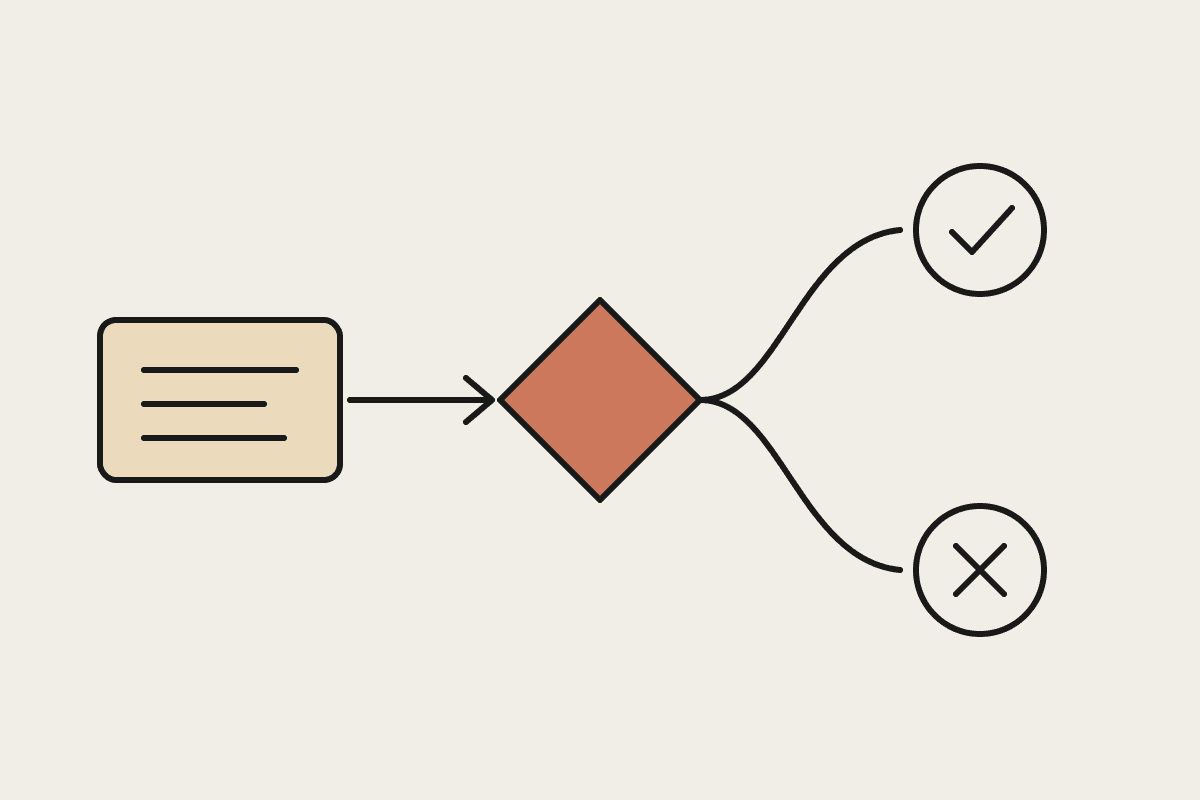
A simple way to score what comes back is to compare vendors line by line:
| Document | What it tells you | Red flag if missing |
|---|---|---|
| Training data summary | Copyright and personal information exposure | Vendor cannot say what the model learned from |
| Framework alignment statement | Which external rules the vendor has accepted | No framework named at all |
| Limitations and failure modes | Where the model should not be used | Only benchmark scores supplied |
| Data handling terms | Hosted versus self-run data flows | Answers given verbally only |
| Usage policy | What the vendor permits and prohibits | Policy not published |
How open-weight and frontier vendors compare
Many frontier vendors already publish model cards and usage policies that cover much of this ground, and Anthropic is one of them. That is a large part of why we point most of our Australian clients towards Claude for anything client-facing or judgement-heavy. Open models like Kolibri-1 are not bad. Anthropic's documentation and support model is built for exactly the enterprise due diligence process that this release highlights as a gap in the open-weight world.
Open-weight releases vary far more. Some ship with detailed documentation, as Kolibri-1 does. Others arrive with a benchmark table and a licence file. Our look at Meta's Muse Glimmer licence shows why the licence alone deserves careful reading, and our note on adding new open-weight labs to your vendor list covers how to record them in your register.
The practical consequence is that open-weight vendors should be held to the same documentation standard as API vendors. If a lab can produce release-time compliance paperwork, others can too, and a buyer who asks for it is not being unreasonable.
What a documentation review costs
Having someone qualified read a model's compliance paperwork and assess it against your own regulatory exposure typically runs $2,500 to $6,000 for a mid-sized Australian business. That is a sensible line item next to a procurement decision worth tens of thousands of dollars a year. As an illustrative example, a firm committing $60,000 a year to an AI platform would spend no more than 10% of one year's fees on a review that could save it from an unsuitable vendor.
The review does not need to be repeated for every minor model update, but it should be revisited when a vendor changes its training approach, its data handling terms or the framework it claims to follow.
The signal worth watching
If a vendor cannot answer the compliance documentation questions above, that is a more useful signal than another benchmark score. Benchmarks change every few weeks. A vendor's willingness to put its training and data practices in writing changes far more slowly, and it tells you how that vendor will behave when something goes wrong.
If you want help assessing a vendor's paperwork against your obligations, our services include vendor documentation reviews, or you can contact us to talk through your shortlist.