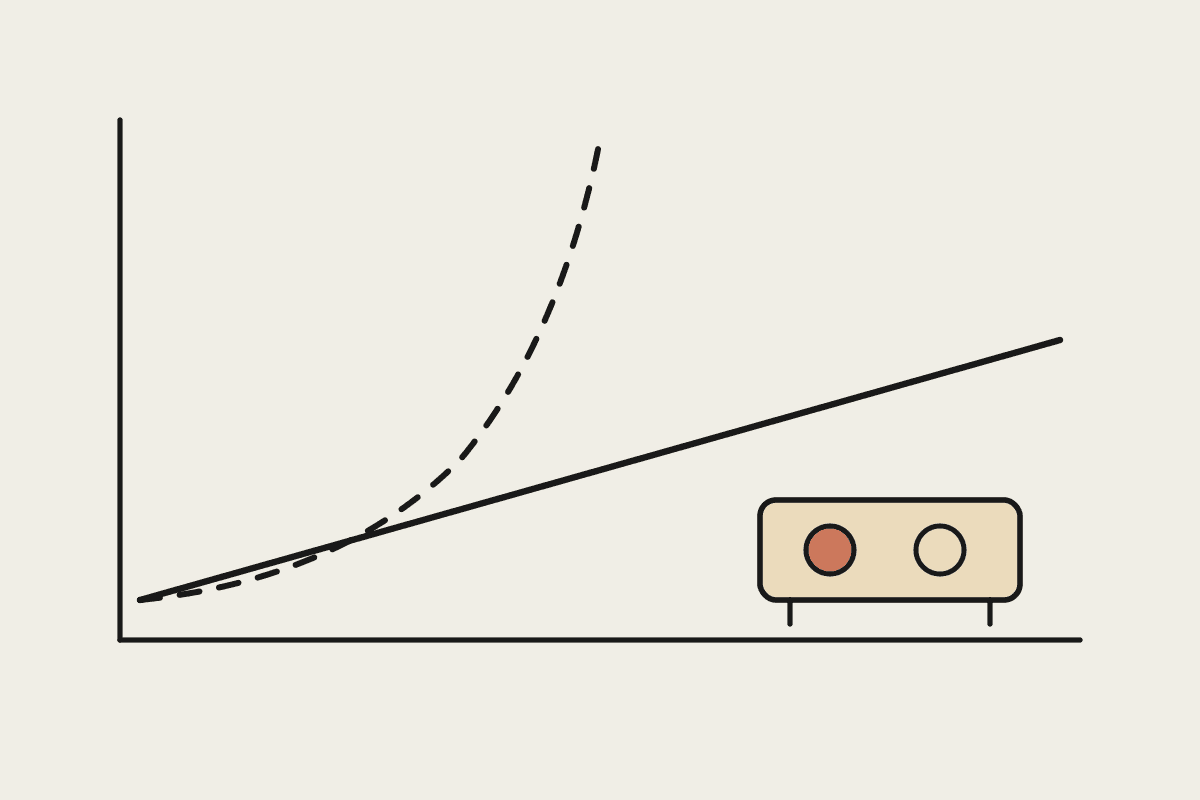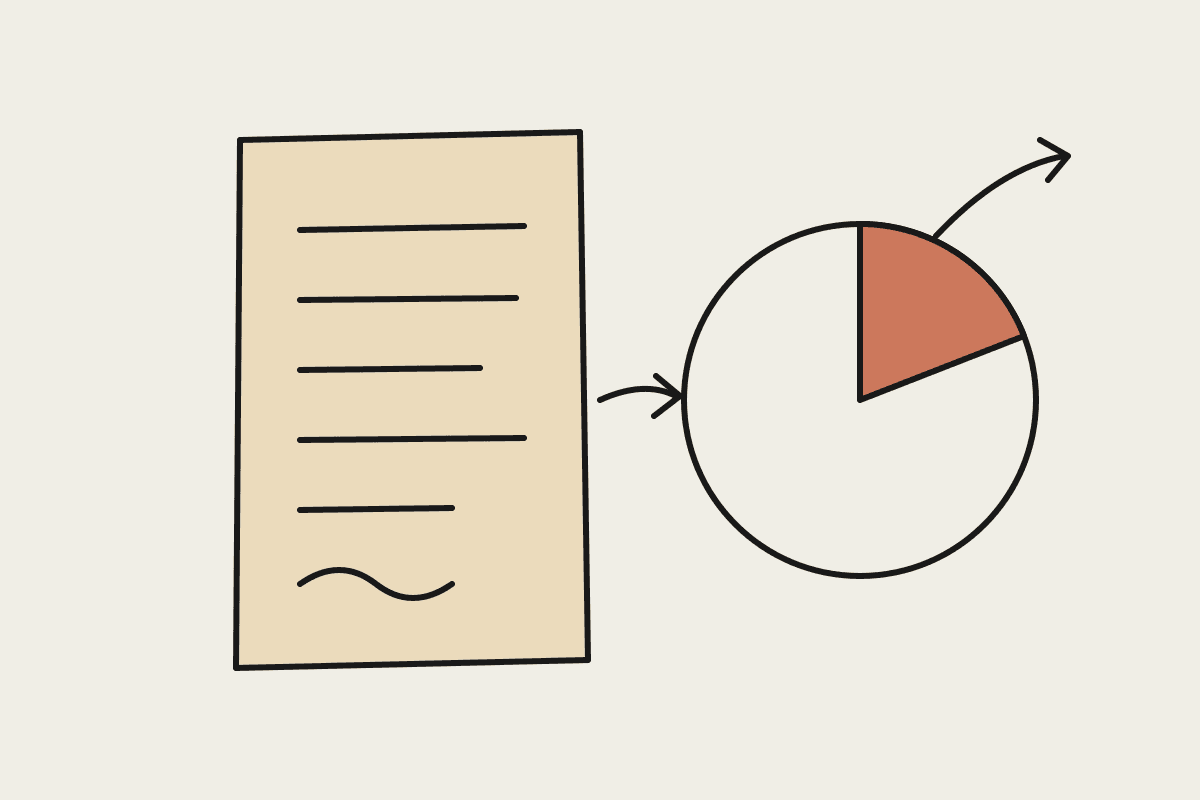
Ask your finance lead a simple thing: if the product you are building on an open-weight model has a good year, who else gets paid? For a growing list of large Chinese releases, Qwen3.8-Max among them, the licence now has an answer, and it is not "nobody".
Alibaba shipped Qwen3.8-Max with its weights open to download. What changed during 2026 is the paperwork around several models in this class. Clauses have started appearing that require a share of revenue, or an upfront licence fee, once a commercial deployment passes a stated threshold. Australian buyers who read "open weights" as "free forever" are working from an older map.
What is a revenue-share clause in an open-weight licence?
A revenue-share clause is a term in a model licence that lets you download and run the weights at no charge until a product built on them earns more than a stated amount, commonly reported in the low millions of dollars a year. Past that line you owe the lab a percentage of revenue or a fixed licence fee.
Earlier open-weight releases from Chinese labs mostly carried Apache-style permissive terms with no such trigger. The newer pattern mirrors, in reverse, what some Western labs did earlier when they restricted large-scale commercial use of releases they still called open. We covered one version of it in Kimi K3's revenue gate. Qwen3.8-Max shows it is no longer a one-lab habit.
Four questions to settle before you build
The clause itself is usually a paragraph. The cost sits in what that paragraph leaves undefined. Before engineering time goes in, get written answers to these:
What is the threshold, and in what currency? A trigger set in US dollars moves against you whenever the Australian dollar falls.
Does it count revenue from the one product that uses the model, or revenue across the whole business?
Is it retroactive? If the terms changed after you deployed, do the old terms still cover your existing deployment?
Who tracks and reports revenue against the threshold, and what happens if the number you report turns out to be wrong?
The second question is the one that catches established companies. A Brisbane distributor with $40 million in turnover that adds one small AI feature may already be over a whole-of-business threshold on day one, even though the feature itself earns almost nothing.
The currency problem, worked through
Take an illustrative threshold of US$2 million a year. The figure is ours, chosen to show the mechanics, not a quote from any licence. The clause does not change, but the point at which an Australian business trips it does.
| AUD/USD rate | Threshold in AUD | Change from 0.70 |
|---|---|---|
| 0.70 | $2,857,000 | Baseline |
| 0.65 | $3,077,000 | +$220,000 |
| 0.60 | $3,333,000 | +$476,000 |
| 0.75 | $2,667,000 | -$190,000 |
A weaker Australian dollar gives you more headroom in local terms, and a stronger one takes it away. A business forecasting $2.8 million in product revenue is under the line at one rate and over it at another, with no change in how many customers it has. That belongs in the forecast, next to hosting and staffing.
Why the clause is spreading
Training a model at the top of the open-weight tables costs hundreds of millions of dollars. Labs, including well-funded Chinese ones, are under real pressure to earn that back. A fully permissive licence with no way to capture revenue is becoming the exception for the largest and most capable releases, while smaller and older models stay free in the full sense.
So "open weights" is now a spectrum. At one end sit plain Apache and MIT terms. In the middle sit revenue gates and usage caps. At the far end sit research-only licences. Our read of the licences on 30 models marketed as open found the middle is crowded, and MiniMax's mid-stream licence switch showed terms can move after release.
What a missed clause costs
A Melbourne startup built its product on an open-weight model that later added a revenue-share clause. Six months into the product's life it was in an unplanned renegotiation. Legal fees and the engineering time to migrate to another model came to an estimated $60,000. A commercial lawyer reading the licence before the build would have cost a few thousand dollars.
The practical habits are cheap by comparison:
Budget legal review before building anything revenue-generating on open weights.
Recheck licence terms once a year. Several vendors changed terms on already-released models during 2026.
Keep a record of the licence version in force on the day you deployed.
Put any expected revenue share into the cost comparison against a managed platform.
What not to conclude
None of this makes Qwen3.8-Max a bad model or a bad choice. A revenue share that only applies once a product is earning millions can be a fair trade, and for an internal tool that earns nothing it may never apply. The mistake is treating the licence as settled because the download was free.
It also cuts both ways. A managed model such as Claude has its own terms and its own price changes. The difference is that the price is published per token and paid as you go, so it is in your budget from the first invoice. If you are weighing the two, run both through our ROI calculator with the revenue share included as a line item.
If you would like a second pair of eyes on a licence before your team commits to it, as at September 2026 terms, book a session with us and bring the licence text.