AI meeting note-takers have become close to default software for Australian professional services, healthcare and financial services businesses over the past two years, and for good reason: they save real time on manual note-taking and produce more reliable action item tracking than most people manage by hand. What gets skipped in the buying decision, more often than it should, is where the recording and the transcript actually get processed and stored.
Why data residency matters more for some conversations than others
A recording of an internal team stand-up carries relatively low sensitivity. A recording of a client's financial planning conversation, a patient consultation, or a legal advice session is a different matter entirely, and the Privacy Act, combined with sector-specific obligations under APRA prudential standards for financial services or health records legislation for medical practices, means the business needs to actually know where that data goes, not assume it stays in Australia by default. Most mainstream AI note-taking tools, built by large US vendors, process data on US infrastructure unless a business specifically pays for and configures a regional option, which not every plan tier offers.
This is not a reason to avoid AI note-takers altogether. It is a reason to ask the specific question before signing up, rather than after a client or a compliance review asks it first. The honest answer from most mainstream tools, when you actually dig into their documentation, is that data residency guarantees are either unavailable, available only on enterprise tiers at a meaningfully higher price, or simply not something the vendor commits to contractually at all.
What to actually check before choosing a tool
Whether the vendor offers a contractual, not just marketing-page, commitment to regional data processing
Whether that commitment applies to the recording, the transcript, and any AI-generated summary, not just one of the three
What happens to the data after the meeting: retention period, whether it is used for model training, and how deletion actually works
Whether the tool integrates with Claude or another AI assistant your business already trusts for the follow-up drafting step
For a business genuinely committed to Australian data residency, the more reliable path in 2026 is often not a dedicated note-taking app at all, but building the recording, transcription and summary workflow around Claude directly, where the business controls the integration and can specify exactly where processing happens, rather than accepting a consumer note-taking app's default architecture. This costs more to set up, typically $3,000 to $7,000 for a properly configured workflow versus a $15 to $40 a month subscription, but for a financial advice practice, a healthcare provider or a legal firm, that upfront cost buys a genuinely defensible answer to the data residency question rather than a hopeful assumption.
A practical middle ground
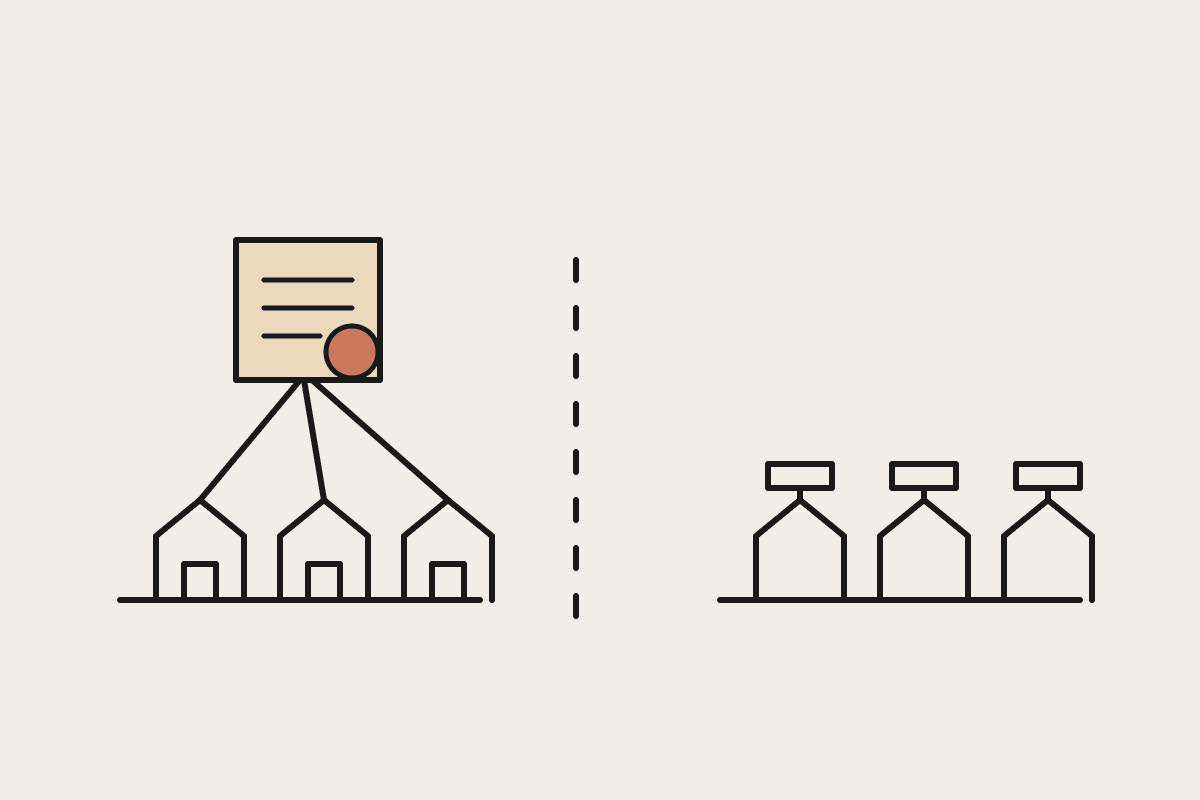
It is worth being specific about what 'keeps data in Australia' actually means in practice, because vendors use the phrase loosely. Some tools process the audio in real time offshore but store the final transcript in an Australian region, which is a meaningfully weaker guarantee than a tool that keeps the entire pipeline, including the raw audio processing, within Australian infrastructure. Reading the actual data processing agreement, not just the marketing page, is the only reliable way to know which of those two your chosen tool actually delivers, and most Australian buyers skip this step entirely because the DPA is buried three clicks deep in a legal terms page nobody reads before signing up for a free trial that later becomes the default tool the whole team uses.
A Melbourne financial planning practice we worked with had been using a mainstream US-based note-taker for client review meetings for over a year before a compliance review flagged that client SOA discussions, arguably some of the most sensitive conversations the practice has, were being processed on offshore servers with no contractual data residency guarantee. Migrating to a Claude-based recording and summary workflow with explicit Australian data handling took about three weeks to build and cost roughly $5,500, a modest expense against the compliance exposure it closed.
Not every Australian business needs to solve this problem the expensive way. A business whose meetings rarely touch sensitive client, health or financial information can reasonably use a mainstream note-taker without much concern, and the time saving is real regardless of the underlying infrastructure question. The businesses that need to take this seriously are the ones where a meeting transcript could plausibly contain protected health information, specific financial advice, or anything covered by a professional confidentiality obligation, which in practice means most financial services, healthcare, legal and allied health businesses should be asking this question before their next subscription renewal, not treating it as a hypothetical concern for later.