Most Claude agent pilots we see in Australian mid-market firms do not fail on the first demo. They fail in month three, when someone tweaks the prompt, a newer model ships, and nobody can say whether the agent got better or worse. In October 2026 Anthropic added three features to Claude Managed Agents that go straight at that problem: outcomes, dreaming and multiagent orchestration.
This post walks through what each feature does, what Anthropic's own customer numbers say, and how we would sequence them if you are running a pilot today. The source is Anthropic's announcement on the Claude blog, and the figures quoted below are Anthropic's and its customers' own reports.
What do outcomes, dreaming and multiagent orchestration add to Claude Managed Agents?
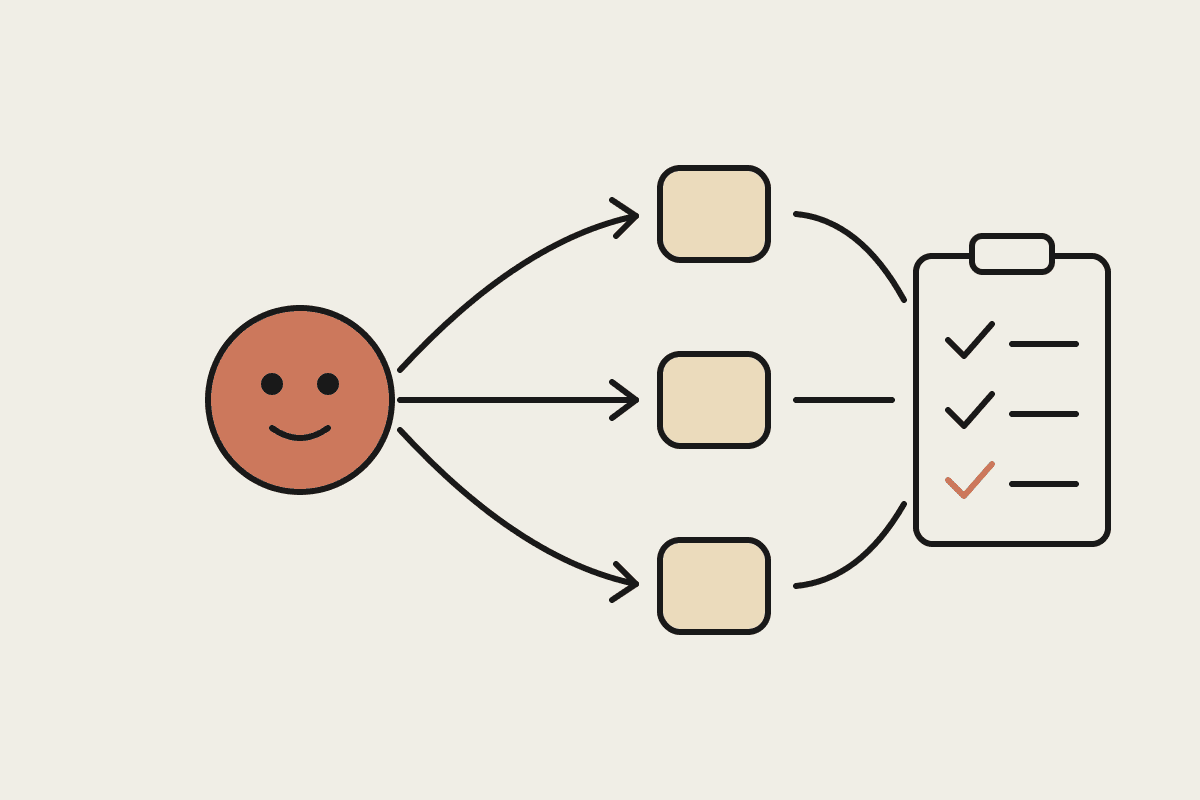
Outcomes lets developers write a rubric for what a finished job looks like, and a separate grader checks the agent's output against it before another pass. Dreaming is a scheduled review of past sessions and memory that keeps useful lessons and flags repeated mistakes. Multiagent orchestration lets a lead agent hand subtasks to specialist subagents that work in parallel on a shared filesystem.
Each one maps to a place where pilots usually stall:
Outcomes (public beta)
Dreaming (research preview)
Multiagent orchestration (public beta)
| Feature | Stage | Pilot problem it targets |
|---|---|---|
| Outcomes | Public beta | No repeatable way to grade output quality |
| Dreaming | Research preview | Agent forgets lessons between sessions |
| Multiagent orchestration | Public beta | One agent doing too much, hard to debug |
Outcomes is the one to start with
If you only adopt one of the three this quarter, make it outcomes. The grader runs in its own context window, so it is not marking its own homework the way a self-check prompt does. It flags what needs fixing and triggers another pass, which turns quality from a feeling into a number you can track release by release.
Anthropic reports task-success gains of up to 10 points over a standard prompting loop, including +8.4% on docx files and +10.1% on pptx files, with the largest gains on the hardest problems. Wisedocs, which uses outcomes to grade document reviews, reports reviews running 50% faster.
The real work is the rubric. A vague rubric ("the summary is good") gives you a vague grader. A useful one names the checks a senior reviewer would run: every figure traced to a source line, the client's name spelled as in the CRM, no advice outside the firm's licence. That rubric is also the document your risk team will ask for, which matters for anyone working under APRA CPS 230 or the Privacy Act.
A worked example in AUD (illustrative)
Take a Sydney accounting practice whose agent drafts 400 client engagement letters a year, with a partner reviewing each one for 15 minutes at a loaded cost of $180 an hour. That is about $18,000 a year in review time. If a rubric-graded loop catches the routine errors first and halves review time, the practice gets back roughly $9,000 a year, before counting fewer letters going out wrong. These numbers are illustrative; your own volumes and rates are what count, and our services team can run them with you.
Where dreaming helps, and where to keep a human in the loop
Harvey reports completion rates up roughly 6x in testing after adding dreaming, because its agents keep what they learned between sessions instead of starting from scratch. An agent that has run the same workflow 200 times should be better at it than on day one, and that only happens if something curates the memory.
Our advice for regulated teams is to start with dreaming set to queue changes for review rather than write memory automatically. Memory that edits itself is powerful, but it is also a change to production behaviour that nobody signed off. Treat queued memory updates like a pull request. We covered the underlying patterns in Claude Managed Agents memory patterns.
Multiagent orchestration: cheap leads, strong specialists
The most interesting customer pattern in the announcement is Spiral by Every. It runs a low-cost Haiku lead agent that delegates drafting to Opus subagents, then scores drafts against editorial and voice rubrics using outcomes. The expensive model only does the part that needs it, and the grader keeps the output consistent.
Netflix's platform team took a different route: a log-analysis agent that works through hundreds of builds in parallel to surface recurring issues. Both cases share one trait. The work divides cleanly into pieces that do not need to talk to each other much, which is when splitting pays off. If your subtasks constantly depend on each other, a single agent is often simpler to run and debug. For the infrastructure side, see Claude Managed Agents in production.
What not to conclude from the announcement
A few cautions before you rebuild your pilot around these features:
The benchmark gains are Anthropic's own figures on its own tasks. Your documents and your rubric will give different numbers, so measure on your workload.
Dreaming is a research preview. Expect its behaviour to change, and do not make it a hard dependency for a client-facing system yet.
A grader is only as good as its rubric. Outcomes does not remove the need for a person who knows what good looks like; it captures that person's judgement so it runs every time.
If you are setting up evaluation for the first time, our pre-launch test plan for Claude apps is a sensible companion to an outcomes rubric.
If your Claude agent pilot is stuck because nobody can say whether the last change made it better or worse, that is the problem we work on most. Book a time with us and we will help you write the first rubric and wire outcomes into your build before it reaches production.