Plenty of APRA-regulated firms now have an open-weight model somewhere in the stack. Sometimes it was a cost decision, sometimes a specific on-premises workload, sometimes a fallback in case a managed API went down. In most of those firms the model went in through an engineering decision, and the risk function found out later.
That leaves a gap that general AI governance frameworks rarely cover: where the model weights came from, and whether anyone can prove it. With poisoning and backdoor risks in open-weight checkpoints now documented rather than theoretical, a dedicated audit is worth running. This piece sets out a 13-week plan a 50 to 200 person financial services firm can run with its existing risk and engineering staff.
What is a model supply chain audit for an APRA-regulated firm?
A model supply chain audit is a time-boxed review of every open-weight model your firm runs or is evaluating, covering where each set of weights came from, who changed them, who approved their use, and whether they behave as expected. It sits alongside your CPS 234 information security work and Privacy Act controls, but asks a question those reviews usually skip: can we prove the provenance of the model itself?
Most AI governance checklists built for CPS 234 or the Privacy Act focus on data handling, access controls and output monitoring. Those matter. They just do not ask whether a fine-tuned variant was independently verified, or whether the file in production matches what the lab published. That is the gap this audit closes.
If you want the control-by-control view of checkpoint provenance, our open-weight poisoning vendor checklist covers it. This piece is about sequencing that work into a 90-day program with owners and sign-offs, which is what an APRA review will actually want to see.
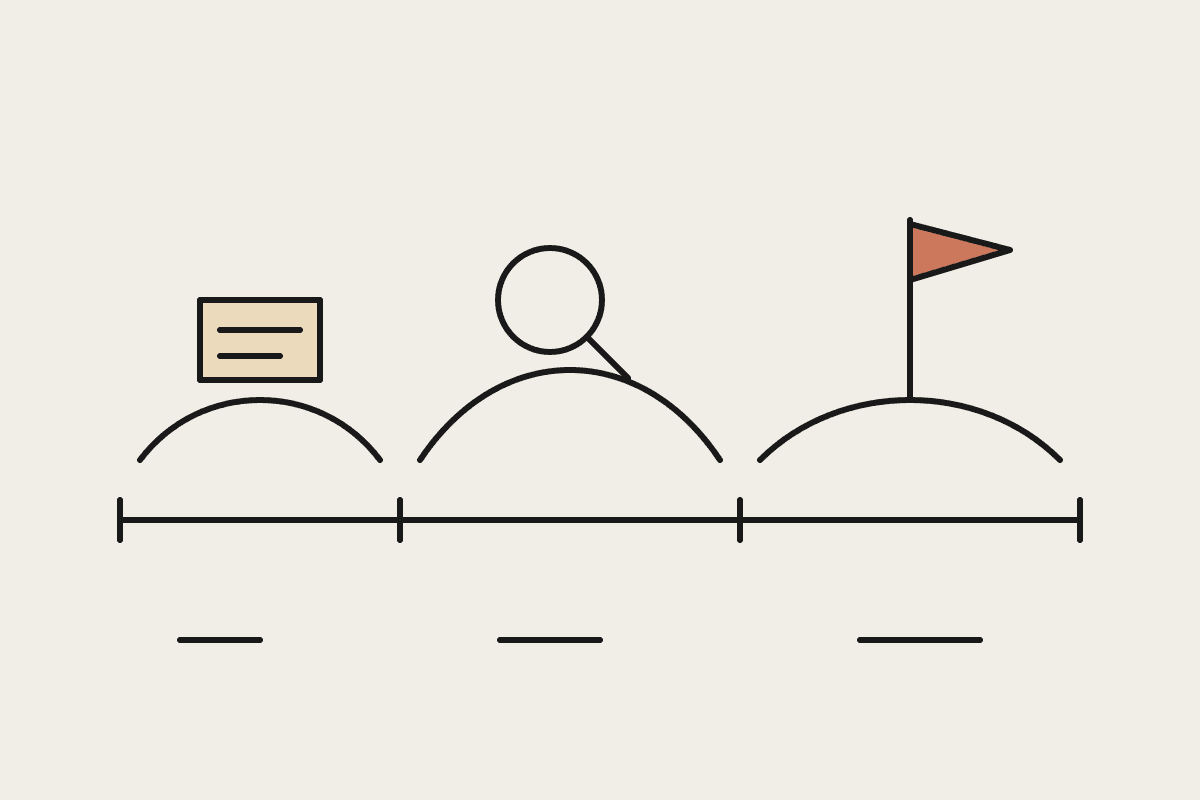
The 90-day plan, phase by phase
Weeks 1 to 3: inventory
List every open-weight model in production or under evaluation, including community fine-tunes, and record the source repository for each.
Identify who approved each model's adoption, and whether that approval predates today's known poisoning risks.
The inventory is usually the most revealing phase. Models adopted for a proof of concept tend to drift into production without a second approval, and fine-tunes pulled from public hubs often have no recorded source at all.
Weeks 4 to 8: verification
Re-source each model from the original lab's official repository and check published cryptographic hashes where they are available.
Flag any unverified community fine-tune for replacement with an official checkpoint, or for a documented risk acceptance signed by a named risk owner.
Run each production model through a behavioural anomaly test, not just an accuracy benchmark, before continued use is approved.
Behavioural testing is where most teams need help. Our safety testing checklist sets out what a useful anomaly suite looks like for a self-hosted model.
Weeks 9 to 13: governance
Write a standing model provenance policy into your existing AI governance documentation, with a defined re-review cadence. Quarterly is typical for a mid-size Australian firm.
Assign an owner for tracking licence and provenance changes across every model in the stack, separate from whoever owns data privacy sign-off.
| Phase | Weeks | Main output | Typical owner |
|---|---|---|---|
| Inventory | 1 to 3 | Register of models, sources and approvals | Head of engineering |
| Verification | 4 to 8 | Hash checks, replacements, anomaly test results | Security lead |
| Governance | 9 to 13 | Provenance policy and named model owner | Chief risk officer |
What the audit costs and what it protects
For a 50 to 200 person financial services firm, we typically see this audit run $18,000 to $35,000 in internal and contractor time across the 90 days. The spread depends mostly on how many models and fine-tunes are in scope: a firm with one official checkpoint finishes near the bottom of the range, while a firm with several community fine-tunes in production lands near the top.
Set that against the cost of a single compromised model reaching production. Undetected manipulation of outputs feeding a credit decision or an advice recommendation is the kind of incident that becomes a regulator conversation, not just an IT ticket. Against that exposure, the audit is a modest line item.
The alternative: take the question off your desk
Some firms will conclude they would rather not carry model supply chain risk at all on client-facing work. That is one of the clearer arguments for running client-facing and decision-adjacent workflows on a managed platform like Claude, where provenance is answered through the vendor relationship (contracts, attestations, audit rights) rather than by an internal audit team checking hashes.
Either path is defensible. Our guide to open-source AI under APRA rules covers the wider trade-off, and the CPS 230 piece on Claude agents covers operational resilience obligations for the managed route. What is not defensible under an APRA review is having no documented answer to where a model's weights came from.
What not to read into this
An audit does not mean your current models are compromised. Most firms that run this find a handful of undocumented approvals and one or two community fine-tunes to replace, not a backdoor. Nor is 90 days a fixed rule; a firm with a single model can compress it. The point is to end with a register, a policy and an owner, so the next model adoption goes through a process instead of around one.
If you want a structured view of where your firm stands first, our AI readiness assessment is a good starting point, or contact us to talk through scoping an audit.