On 16 September 2026 Anthropic announced that Claude Cowork and Claude chat are becoming one product. There is no longer a separate place you go for bigger jobs. You open Claude, describe the work, and Claude works out whether it needs a quick answer, a document, a slide deck or a scheduled task. For Australian teams that have spent the past few months rolling out Cowork, the obvious question is whether any of that effort now has to be redone.
Short version: it does not. The rest of this post covers what actually changes, what stays put, and where we would spend attention over the next month if your organisation is mid-rollout.
What happens to an existing Cowork setup when it merges into Claude?
Everything you already built in Cowork carries over into the merged Claude experience. According to Anthropic, chats, projects, artifacts, connectors and skills all move across as they are, so a team that has already configured Cowork does not need to re-onboard staff, rebuild connectors or re-upload project files. The change is to where the work starts, not to what you have set up.
That matters because most of the cost of a Cowork rollout is not the licence. It is the hours spent deciding which connectors to approve, writing the first skills, and teaching people what belongs in a project. None of that is thrown away. If anything, it becomes easier to use, because staff no longer have to remember which surface a given skill or connector lives in.
The rollout itself is staged. The announcement gives this order:
Pro and Max plans first, rolling out over the few weeks from 16 September 2026.
Team and Free plans after that.
Enterprise last, with at least 30 days of notice before the change reaches your tenant.
If you run Claude on an Enterprise plan in Sydney, Melbourne or Brisbane, that notice period is your window to update internal guides and training material. If your people are on Team plans, expect the change to arrive with less warning, and brief them before they log in to a different-looking app.
Why Anthropic folded Cowork back into Claude
Anthropic's stated reason is simple. Cowork was built as a separate place for bigger work, and Claude Design as a separate place for visual work. Users did not want to decide where a task belonged before starting it, and work did not carry over cleanly between surfaces. Merging them means one conversation can hold the whole job, with your existing context, skills and connectors available from any chat.
We saw the same friction in client rollouts. A finance lead would start a variance question in chat, realise it needed a spreadsheet and a summary, then have to restart in Cowork and paste the context across. That restart is small, but it happens dozens of times a week across a team, and it is exactly the kind of lost time that makes people quietly stop using a tool.
What is new: Docs, Slides and Design inside the conversation
Alongside the merge, Anthropic launched Claude Docs and Claude Slides in beta on paid plans, and made Claude Design available inside ordinary conversations rather than as its own surface. Output can be edited directly, presented from Claude, or downloaded as PowerPoint or PDF.
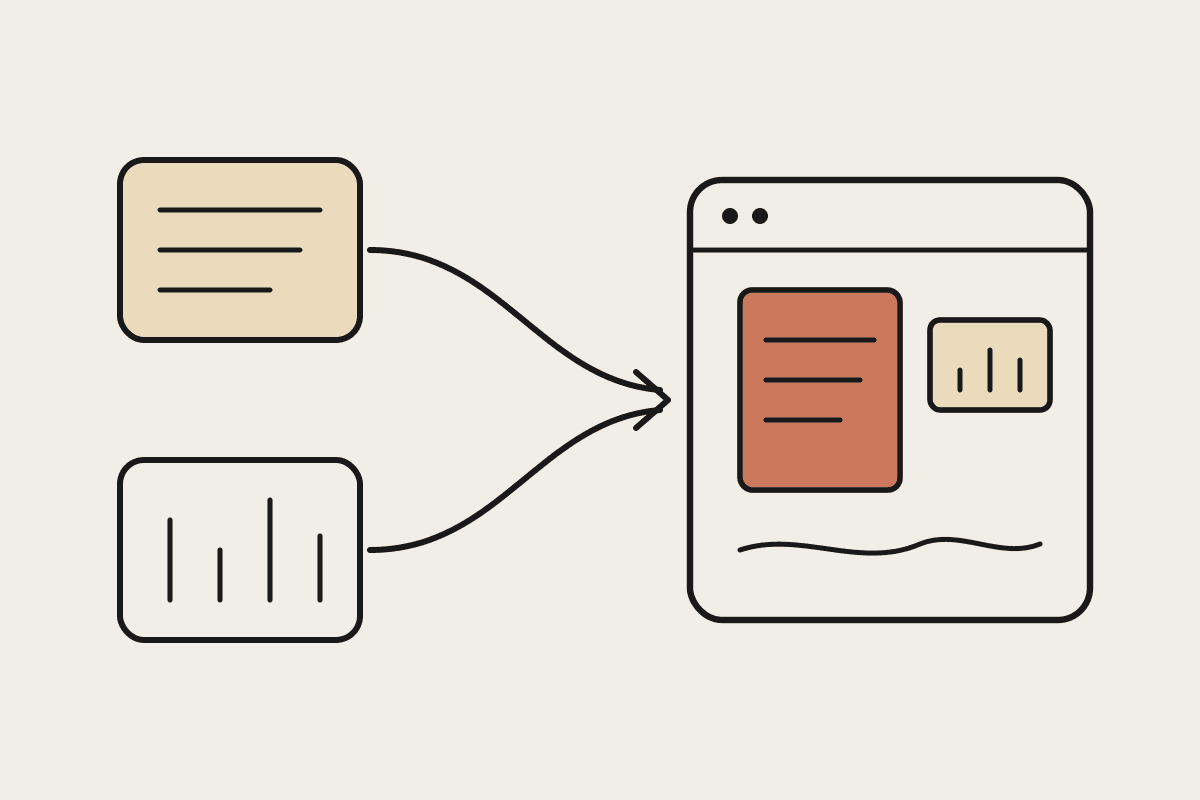
The example Anthropic gives is a useful template for what this looks like in practice. From a single conversation, you ask for a weekly pipeline report and five slides for a leadership meeting. You check progress from your phone. The report arrives as a document your teammates can annotate, and the slides are ready to open, adjust or download. Add “every Monday” and Claude starts the job on schedule without being asked.
| Task | Before the merge | After the merge |
|---|---|---|
| Quick question | Claude chat | Claude, same conversation |
| Multi-file report | Switch to Cowork | Claude, same conversation |
| Slide deck | Claude Design or export by hand | Claude Slides (beta), download as PPTX or PDF |
| Recurring weekly job | Cowork scheduled task | Say “every Monday” in the conversation |
| Existing skills and connectors | Tied to the surface you set them up in | Available from any conversation |
For the kind of deliverable-heavy workflows we build for clients, such as board packs, weekly ops summaries and client-ready reports, this removes the last manual step. The draft no longer has to be copied out of a chat window into a template before anyone can use it.
How much check-in do you want from Claude?
The merged product lets each person choose how often Claude checks in. The default is to ask before acting. The alternative is to let Claude work on its own and only flag the things that need a closer look. This is the setting we would think hardest about before the change lands, because it is a governance choice dressed up as a preference.
A reasonable starting position for most Australian mid-market teams:
Keep the ask-first default for anything that sends, publishes or writes to a system of record.
Allow autonomous mode for drafting and research work where the output is reviewed before it goes anywhere.
Write the rule down once, in the same place you keep your Privacy Act and data-handling guidance, so staff are not guessing.
If you have already worked through permission modes for Cowork, the thinking carries across. Our post on choosing a Cowork permission mode on purpose still applies; only the place you set it is changing.
A worked example: what the merge saves a 25-person team
To make this concrete, here is an illustrative estimate, not a measured result. Take a 25-person professional services firm where 15 people use Cowork for reports and client material. Suppose each of them loses around 10 minutes a day to switching surfaces, re-pasting context and reformatting output into a template. That is 2.5 hours a day across the team, or roughly 600 hours a year.
At an illustrative blended cost of $95 an hour, that is about $57,000 a year in time that produces nothing. The merge will not recover all of it, since some reformatting is judgement rather than friction. Even recovering half is a meaningful return on a change that costs you nothing to adopt. Our ROI calculator lets you run the same sum with your own headcount and rates.
What not to conclude from the merge
Three readings we would push back on if we heard them in a client meeting.
“Cowork is going away, so we should pause our rollout.” It is not going away. Cowork is becoming the default way Claude handles bigger work. Pausing now only delays the benefit, and the setup you do today carries straight over.
“We can drop our governance work because it is all one app now.” One surface makes connectors and skills easier to reach, which is a reason to tighten approval rules, not loosen them. Our earlier look at what Cowork costs an Australian business covers where usage and spend tend to creep.
“Docs and Slides replace our Microsoft 365 or Google Workspace licences.” They are in beta, and they are built for producing and presenting work from a conversation. Treat them as a faster first draft that exports to PowerPoint or PDF, not as a replacement for your document management system.
What to do this month
If your team is already on Cowork, update one page of internal guidance to say that everything now starts in Claude, and check which permission mode people are defaulting to. If you are still planning a rollout, the merge makes the pitch simpler: one product, one place to start, with the 90-day rollout plan we published earlier still a sound sequence. Shared memory between chat and Cowork, which we covered in an earlier post, was the first step in this direction.
Anthropic's full announcement is on the Claude blog. If you would like a second pair of eyes on how the merge affects your setup, see our services or book a short call and we will walk through it with you.